The Packaging and Packaging Waste Regulation — Regulation (EU) 2025/40, universally shortened to PPWR — entered into force on 11 February 2025 and has applied generally since 12 August 2026. It replaced Directive 94/62/EC, which had governed European packaging since 1994, and unlike a directive it applies directly in all 27 member states without national transposition.
For a fragrance brand, that means packaging placed on the EU market now carries documentary obligations, not just design preferences. For a wood packaging factory outside the EU, it means your customers are about to ask you for documents you may never have been asked for before. This article sets out what those are, in the order they will arrive.
What changed on 12 August 2026
- Heavy metals: lead, cadmium, mercury and hexavalent chromium combined must not exceed 100 mg/kg in any packaging, wood included.
- PFAS: limits apply to food-contact packaging. Fragrance caps and gift boxes are not food-contact, but candle packaging that touches wax sold as a consumer product is sometimes argued either way — clarify with your customer rather than assuming.
- Recyclability: all packaging must be designed to be recyclable, with graded performance requirements phasing in from 2030.
- Documentation: the manufacturer must carry out a conformity assessment, compile technical documentation and issue an EU Declaration of Conformity (DoC). Records are kept 5 years for single-use packaging, 10 years for reusable.
- EPR: producer responsibility registration in each member state where packaging is placed on the market, with fees calculated from packaging weight by material.
Is a wooden cap actually “packaging”?
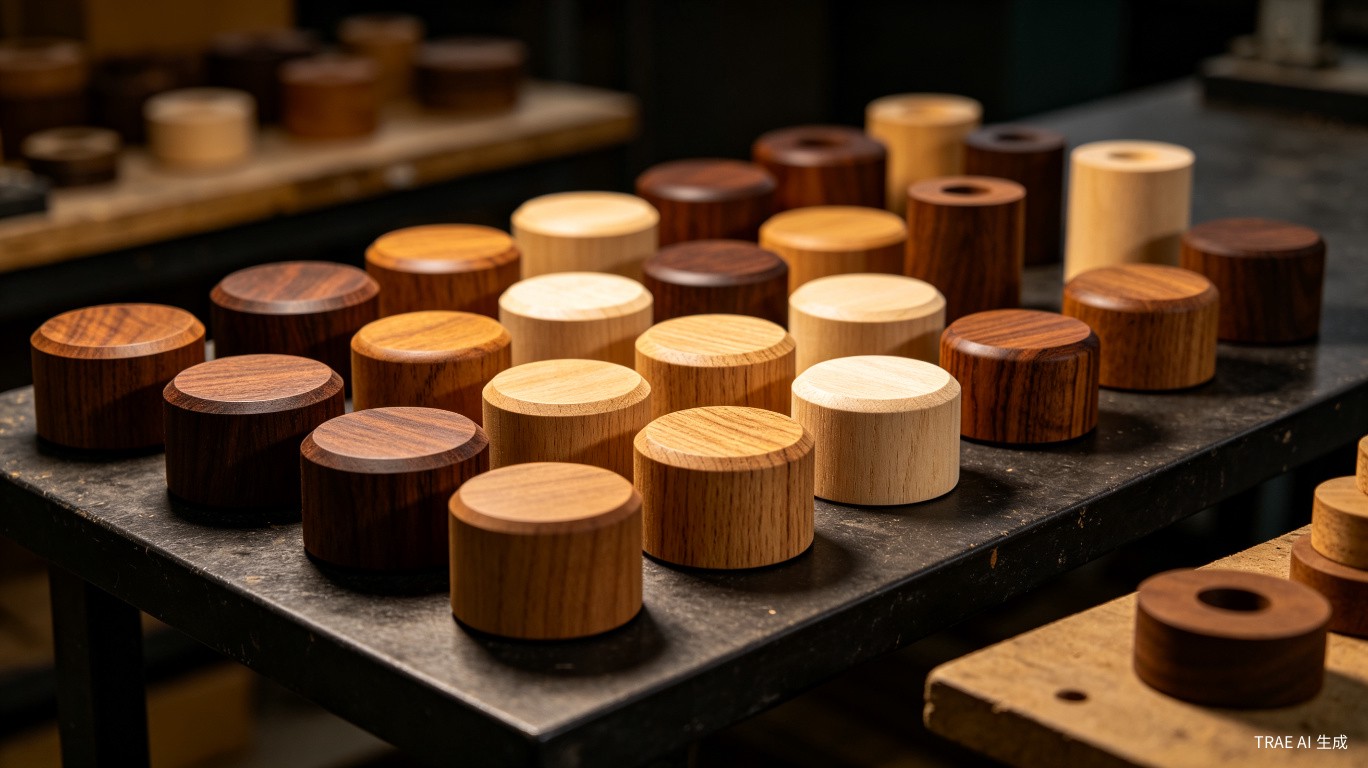
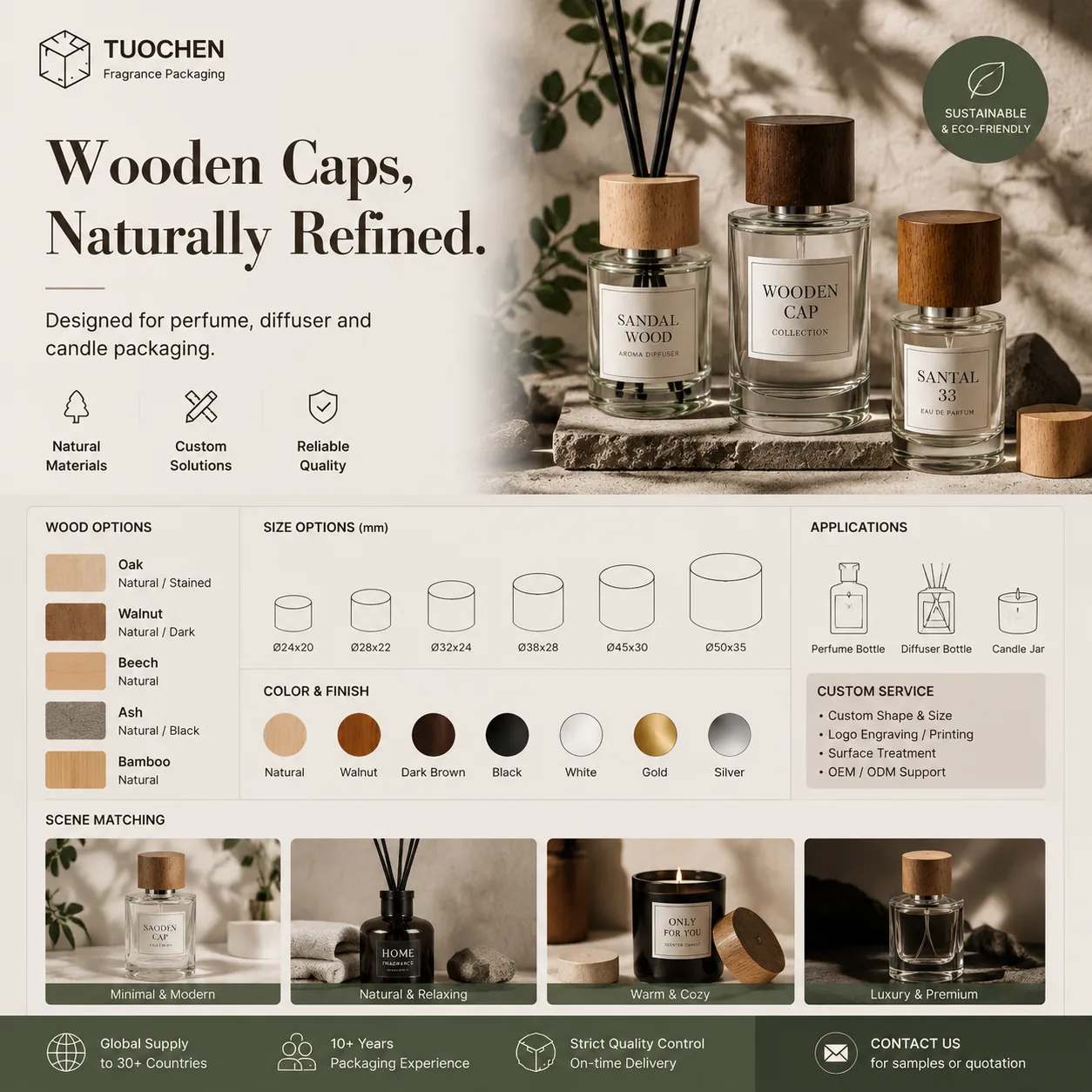
Yes — and this is the question most suppliers get wrong. Under PPWR, packaging is an item used to contain, protect, handle, deliver or present goods, and which is not an integral part of the product itself. A perfume bottle is packaging. Its wooden cap is a packaging component. A wooden gift box holding that bottle is packaging. A wooden display tray shipped to a retailer is packaging.
The test is functional, not material. “It’s a decorative accessory” does not exempt it, because the accessory is doing containment and presentation work.
The four things EU buyers now ask their supplier for
| Document | What it must contain | Who issues it |
|---|---|---|
| Heavy metal test report | Pb, Cd, Hg, Cr(VI) results against the 100 mg/kg sum limit, tested on finished component including coating | Accredited third-party lab (ISO 17025) |
| Material declaration | Every material and its weight share: wood species, coating, adhesive, magnet, liner, inlay | Factory |
| Weight table by component | Grams per material per unit, and per outer carton | Factory |
| DoC support pack | Technical file inputs the brand needs to sign its own declaration | Factory supplies, brand signs |
None of these are optional decoration. A brand that cannot produce a technical file for the packaging it imports risks its shipment being held, and it will pass that pressure straight back to the factory that supplied the components.
Heavy metals: where the risk actually sits in a wooden cap
Untreated timber is rarely the problem. The exposure points are:
- Pigmented stains and paints — older or cheap pigment systems can carry lead or chromium
- Recycled or reclaimed timber — contamination from previous coatings, treated offcuts or mixed feedstock
- Brass and plated hardware — chromium and nickel chemistry, and plating bath residues
- Adhesives and fillers — some putties and grain fillers contain heavy metal driers
Practical consequence: test the finished, coated component, not a bare wood offcut. A report on raw walnut tells your customer nothing about the lacquer film on top of it. Batch-level testing (one report per production lot or per timber purchase) is the arrangement most EU buyers now accept.
Recyclability: where wood wins, and where it loses
Wood is a single-material, fibre-based feedstock with established recycling and energy-recovery routes. In the graded assessment that starts applying from 2030, an unfinished solid wood component with no plastic insert is about as favourable as a packaging item gets.
The problems are additive, and they are all decisions made at design stage:
| Design element | Effect on recyclability | Practical alternative |
|---|---|---|
| Catalysed PU or high-gloss lacquer film | Coats the fibre, complicates repulping and recovery | Hard wax oil, or uncoated sanded finish |
| ABS or PP liner bonded in place | Mixed material, hard to separate | Cork or EVA disc, or wood-faced liner |
| Encapsulated magnet | Metal trapped inside wood | Press-fit into an accessible pocket |
| Brass inlay bonded with epoxy | Metal + adhesive + wood, three-way separation | Mechanical press-fit, or omit |
| Glued lamination with unknown adhesive | Adhesive can disqualify fibre recovery | Declare the adhesive; use starch or PVAc with documented profile |
A caution on the 5% exemption. PPWR exempts plastic components below 5% of total packaging weight — but that exemption is written for recycled content rules on plastic packaging, not as a blanket pass for mixed-material recyclability. Treating a 3 g ABS liner as “under 5%, so we’re fine” is a common and risky reading. Design it out instead of arguing about it.
The compliance timeline
| Date | Obligation |
|---|---|
| 12 Aug 2026 | General application; heavy metal limits; PFAS limits for food-contact; all packaging must be recyclable in design; DoC and technical file |
| 1 Jan 2030 | Recyclability performance grades A/B/C (≈70%+); packaging minimisation requirements apply |
| 1 Jan 2038 | Recyclability grades A/B (≈80%+) |
The Commission published implementation guidance and a substantial FAQ in March 2026, and the harmonised standards underpinning recyclability grading are still being finalised — so the practical test today is a documented, defensible design rationale rather than a certificate nobody can yet issue. Document what you did and why.
EPR fees need grams, not adjectives
Every EU member state runs a producer responsibility scheme, and fees scale with the weight of each material placed on the market. A brand registering a 180 g wooden gift box with a 4 g magnet and a 6 g foam insert reports three material lines. If your weight table is wrong, your customer overpays or under-declares and gets audited.
This is the cheapest compliance work available: weigh ten units, average them, publish a table per SKU. It takes an hour and removes a recurring argument.
Five questions your EU customer will ask this quarter
- Can you supply a heavy metal test report on the finished component, and how often is it renewed?
- What is the exact material composition and weight of each component?
- Is the coating separable or compatible with fibre recycling?
- Can you provide the technical file inputs we need for our DoC?
- Does the design meet the 2030 recyclability grade, and what would you change if it does not?
What good looks like from a supplier
A supplier who has done this work answers in documents, not assurances. On request we provide: a batch heavy metal report from an accredited lab, a per-SKU material and weight declaration, coating and adhesive data sheets, and a design note explaining the recyclability rationale behind each construction choice — plus FSC transaction certificates where certified timber is specified.
If you are redesigning a component for PPWR, the two changes that deliver the most compliance value per dollar are switching a PU lacquer to hard wax oil, and replacing a bonded ABS liner with cork. Both are covered in our candle lid and perfume cap specifications, and both are worth discussing before your next tooling order rather than after.
For the material side of the same question, see our FSC certification guide; for the paperwork that accompanies the shipment rather than the product, see the export documentation guide.

Written by
TUOCHEN Editorial
Technical content reviewed by our production engineering team in Guangdong. We have been machining custom wood closures and boxes for fragrance brands since 2012, and we write from drawings and production data rather than from market reports. See the factory.
Need this made to your specification?
We produce custom wooden caps, diffuser stoppers, candle lids and gift boxes from 500 pcs, with FSC certified timber and samples in 7–10 days.