Branding a wooden closure looks like a decoration decision and behaves like an engineering one. The mark has to survive handling, alcohol, and a 40 °C container; it has to read at 300 mm on a retail shelf; and it has to look intentional on a material that is not flat, not uniform in colour, and not the same from one board to the next.
Five methods cover almost all wooden cap branding. They differ by roughly an order of magnitude in cost, and each one has a species it works on and a species it fails on.
The comparison table
| Method | Tooling | Practical MOQ | Cost per unit | Colours | Curved faces | Durability |
|---|---|---|---|---|---|---|
| CO₂ laser engraving | None | 1 | Lowest | Monochrome (burn) | Yes, with rotary axis | Permanent |
| Hot foil stamping | Brass or magnesium die | 500–1,000 | Moderate | Gold, silver, copper, pigment | Limited; flat or shallow curve | Good |
| Silkscreen | Screen per colour | 300–500 | Low–moderate | 1–3 spot colours | Rotary screen only | Fair on high-touch areas |
| Pad printing | Plate + pad per colour | 500 | Low | 1–2 colours | Yes, small areas | Fair |
| CNC inlay / marquetry | Program + fixture | 1,000+ | Highest | Material, not ink | Top face only | Excellent |
Why species decides whether laser works at all
Laser engraving burns the fibre, and contrast comes from the difference between burnt and unburnt wood. That difference varies enormously:
- Beech, maple, ash, birch — light timber, high contrast, crisp detail. The best substrates for laser by a wide margin.
- Oak — good contrast but a coarse grain that breaks fine strokes; also tannic acid causes yellowing around the burn on some boards.
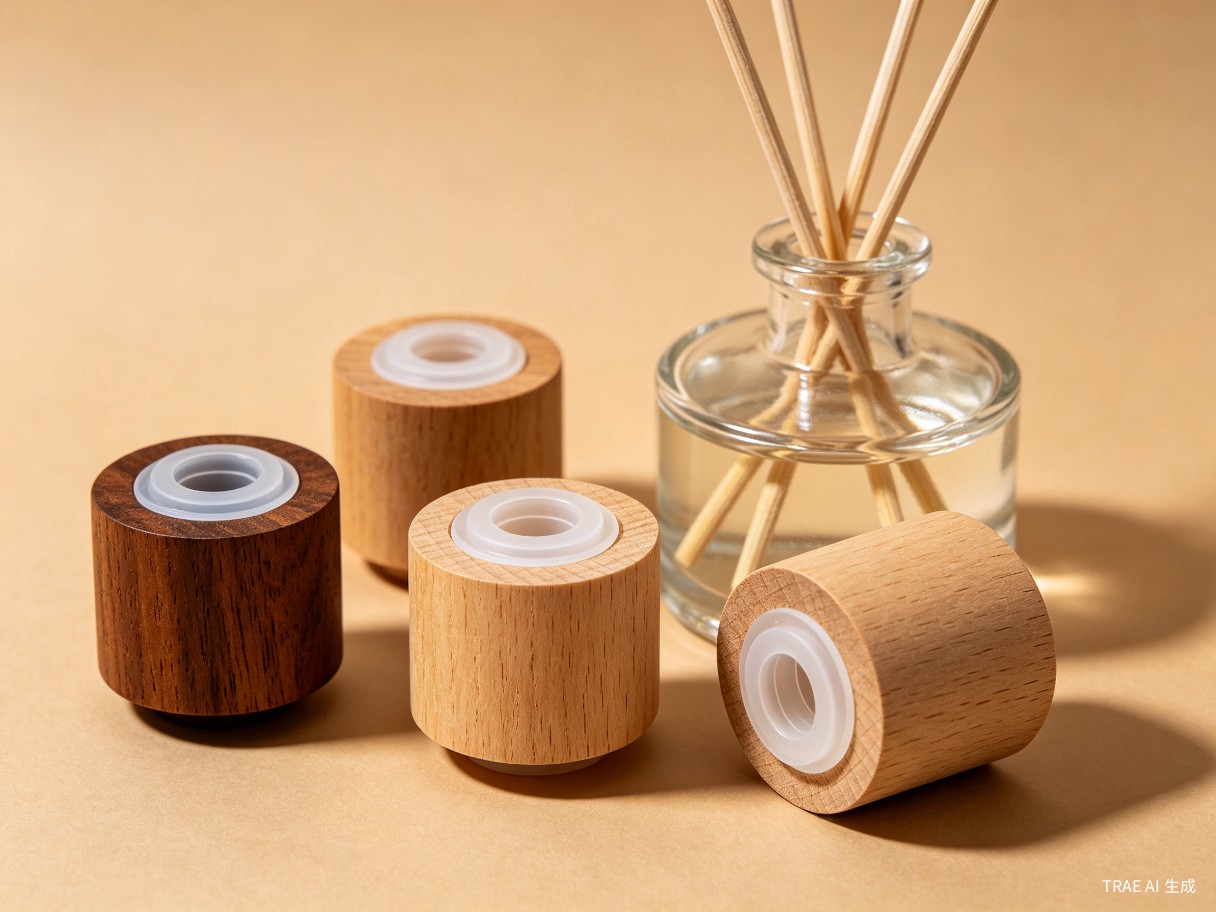
- Walnut — dark timber, low contrast. A mark reads as a subtle tonal shift rather than a logo. For a luxury brand this can be exactly right; for shelf recognition it is usually wrong.
- Rosewood, ebony, wenge — very low contrast, and the oil content can produce uneven burning and a lingering smoky smell that takes days to dissipate in a sealed carton.
If you want a visible mark on walnut, options are a light-fill laser (burn then fill with a pale wax or pigment), hot foil, or a contrasting inlay. If you want a subtle mark, laser on walnut is the most elegant choice available.
Two processing notes: engraving depth of 0.3–0.5 mm is enough for a durable mark, and going deeper roughly doubles cycle time for no visual gain. And laser-marked parts should be aired for 24–48 hours before packing, or the carton will smell of char when the customer opens it.
Hot foil: the luxury default, and its limits
Hot foil stamping presses a heated die against a foil carrier, transferring a metallic or pigmented layer into the surface. It is the standard for premium spirit, cosmetics and fragrance closures because it produces a clean, opaque mark with real depth of colour.
- Tooling: a brass die typically costs USD 80–180 depending on artwork complexity and whether it needs a curved face. It is a one-time cost that most factories will hold for repeat orders.
- MOQ: realistic minimum is 500–1,000 pieces to justify the die and the setup.
- Substrate: works best on a sealed surface — PU lacquer or a filled, sanded face. On raw open-grain wood the foil cannot bond evenly and the mark looks patchy.
- Curve: flat top faces are easy. A strongly domed or cylindrical face needs a contoured die, which costs more and still distorts artwork near the edges.
Foil adhesion is the failure to watch. Specify a tape test (3M 610 or equivalent) on the first batch and an alcohol rub of 50 double strokes on the finished part.
Silkscreen and pad printing: colour at low cost, wear at high touch
Both apply ink to the surface rather than into it, which makes them the cheapest multi-colour options and the least durable on a part that hands touch constantly.
- Silkscreen needs a lacquered or sealed base to hold the ink, and one screen per colour. On a cylindrical cap it requires a rotary screen printer — a capability not every wood shop has, so confirm before you design around it.
- Pad printing handles small, slightly curved areas well and is the usual choice for a logo on the side wall rather than the top.
- Minimum line width: around 0.3 mm for laser, 0.5 mm for hot foil, and 0.8 mm for screen — anything finer closes up or breaks.
Where these fail is abrasion: a 2 cm logo on the cylindrical side of a cap is touched on every open and close. Expect visible wear within a few hundred handling cycles unless a clear top coat is applied over the ink.
CNC inlay: when the mark should be part of the object
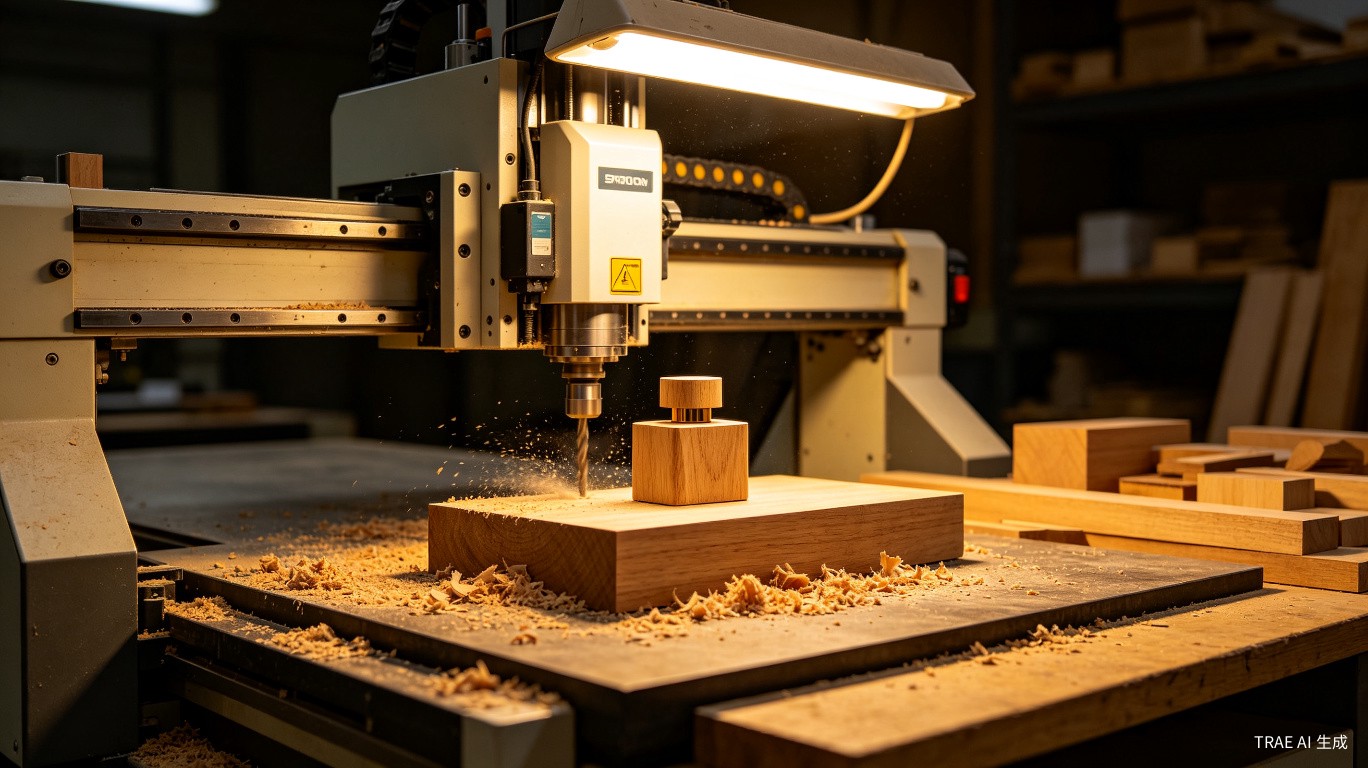
A recess is milled into the cap face and a contrasting material — brass sheet, copper, pale maple, dark ebony — is set in and finished flush. The result looks engineered rather than printed, and it never wears because there is no ink or foil to lose.
The costs are real: a second part to source, a precision pocket, a bonding step, and a scrap rate that rises with the tightness of the fit. Expect roughly 2.5–4× the unit cost of hot foil, with tooling in the hundreds rather than tens, and a practical MOQ around 1,000. For a refillable flagship bottle, it is often the right answer.
Curved surfaces: where artwork quietly breaks
Any mark applied to the side of a cylindrical cap is distorted unless the artwork is pre-warped. A circle becomes an ellipse; horizontal text appears to bend.
- Top face: no distortion, best for wordmarks and emblems. Design here first.
- Cylindrical side: supply artwork pre-distorted for the wrap, or accept a slight elliptical squeeze. Text shorter than about 40 mm of arc is usually safe.
- Domed top: needs the artwork scaled down toward the centre, typically 3–5% per 1 mm of rise.
File preparation rules that prevent a re-run
- Vector artwork — AI, EPS or PDF. Raster files force a re-draw and reintroduce error.
- Fonts converted to outlines. Missing fonts are the single most common cause of a proof that does not match.
- Line weights above the method’s minimum, and no hairlines in reversed-out areas.
- A 1:1 placement drawing showing the mark’s position relative to the cap edge, with a datum.
- Pantone reference for foil and ink, and a physical reference if colour is critical.
- State whether the mark must be readable at 300 mm — it changes the recommended size and method.
Durability tests worth specifying
- Alcohol rub: 50 double strokes with 70% ethanol on the mark. Fails silkscreen quickly, hot foil rarely, laser never.
- Tape test: applies to foil and ink adhesion.
- Taber abrasion for high-touch applications, if your retailer requires a number.
- Humidity cycle: 48 hours at 40 °C / 90% RH, then check for bloom or ink lift on coated surfaces.
Choosing by price point
| Positioning | Recommendation | Why |
|---|---|---|
| Mass / private label | Laser, one pass, top face | No tooling, no MOQ, permanent, cheapest |
| Masstige | Hot foil gold or blind deboss on lacquered face | Reads as premium at moderate cost |
| Colour-critical brand identity | Silkscreen or pad print plus clear top coat | Only route to accurate brand colour |
| Luxury flagship, refillable | CNC brass inlay, flush finished | Permanent, tactile, unmistakably engineered |
One combination is worth flagging because it is underused: laser engraving on a lighter species with a dark fill. It gives the permanence of laser with the contrast of foil, avoids die cost, and works at any quantity — particularly useful for a launch run where you cannot commit to 1,000 pieces yet.
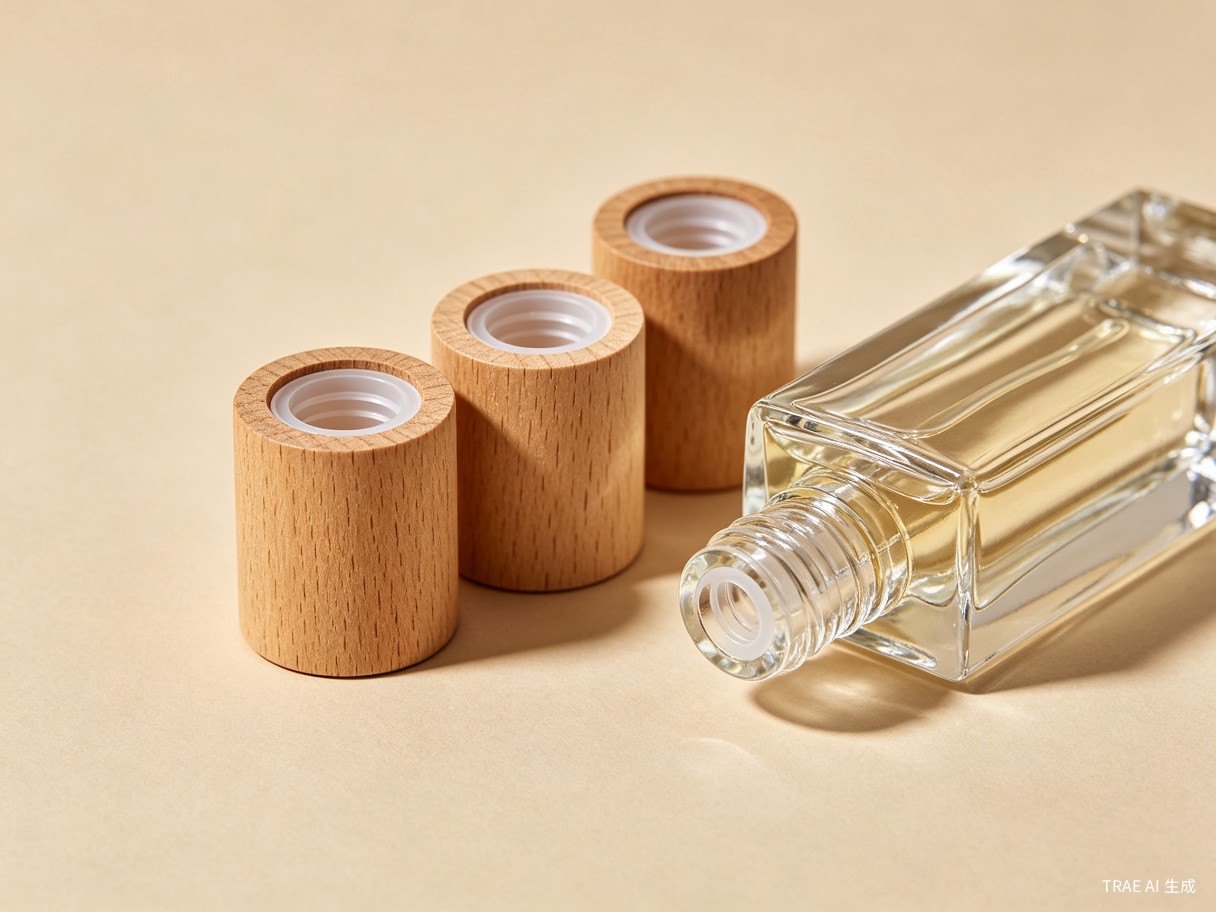
See the perfume cap range for available species and finishes, or the candle lid range where flat top faces make hot foil and inlay practical. If your artwork is already finalised, send the vector file with the placement drawing and we will return a marked-up proof within two working days.

Written by
TUOCHEN Editorial
Technical content reviewed by our production engineering team in Guangdong. We have been machining custom wood closures and boxes for fragrance brands since 2012, and we write from drawings and production data rather than from market reports. See the factory.
Need this made to your specification?
We produce custom wooden caps, diffuser stoppers, candle lids and gift boxes from 500 pcs, with FSC certified timber and samples in 7–10 days.