Send one dimensioned drawing of a wooden perfume cap to five Chinese factories and you will receive five prices spanning a factor of two or three. Buyers often read this as one supplier being honest and the rest padding. In practice, almost every gap traces back to four variables: which timber grade the quote assumes, how much of the board survives machining, how many finishing coats are priced in, and what volume the factory amortised its setup over.
This article breaks a wooden cap down into its six cost blocks, gives indicative shares for each, and explains how to read a quotation so you can compare suppliers on equal terms instead of on the headline number.
Why the same drawing produces a 3x price spread
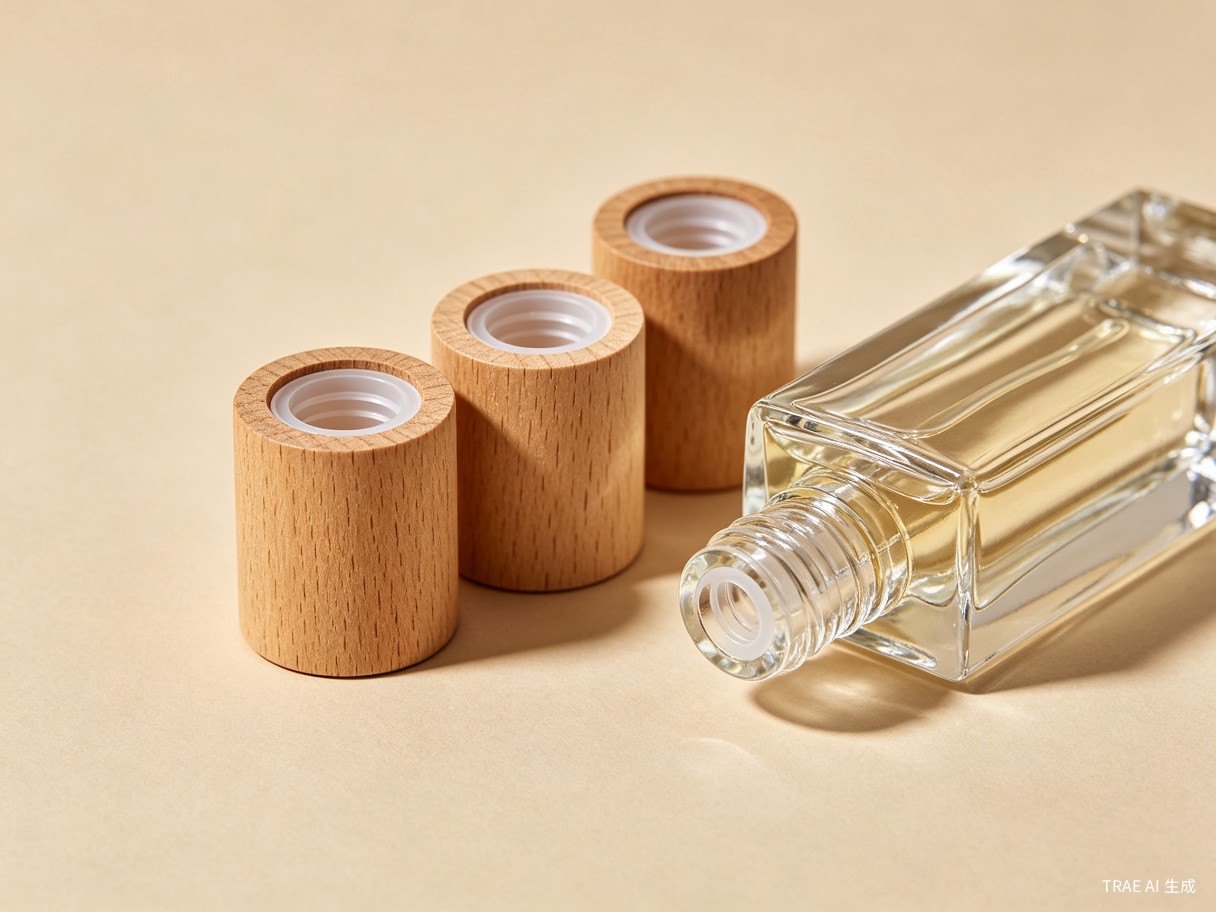
Consider a 52 mm diameter walnut cap, 38 mm high, matte finish, with an inner liner pocket and no magnet. At 5,000 pieces, FOB China, indicative quotes in 2026 land roughly between USD 1.60 and USD 3.40. The spread is real, and it comes from these choices:
- Solid turned blank vs laminated blank. A 38 mm finished height needs either a 40 mm solid board or three 14 mm laminations glued and pressed. Solid board costs more per cubic metre but removes a gluing step and a delamination risk.
- Board grade. FAS-grade walnut with clear faces can cost 40–60% more than a sound-but-character grade with small knots. The cap still looks premium; the yield and rejection rate differ.
- Finishing system. One coat of hard wax oil is not three coats of catalysed PU with sanding between and a colour-match pass.
- Assumed volume. Setup, programming and first-article approval are fixed costs. Spread over 500 pieces they dominate; over 20,000 they nearly vanish.
The six cost blocks inside a wooden cap
| Cost block | Typical share | What moves it |
|---|---|---|
| Timber and yield | 25–40% | Species, board grade, blank size, defect allowance, FSC |
| Machining | 20–30% | Cycle time, number of setups, tolerance, thread vs liner |
| Finishing | 10–20% | Coats, sanding passes, gloss level, colour matching, rework |
| Hardware and inserts | 5–15% | Magnet grade, liner material, brass inlay, glass weight |
| QC and process loss | 3–6% | Scrap rate, AQL level, moisture checks, third-party inspection |
| Packing, overhead, terms | 10–15% | Export carton, foam, ISPM 15 pallet, Incoterm, payment terms |
Ask any supplier to fill in this table for your drawing. A factory that cannot explain its own numbers is either guessing or hiding margin in one line.
1. Timber and yield: the block buyers underestimate most
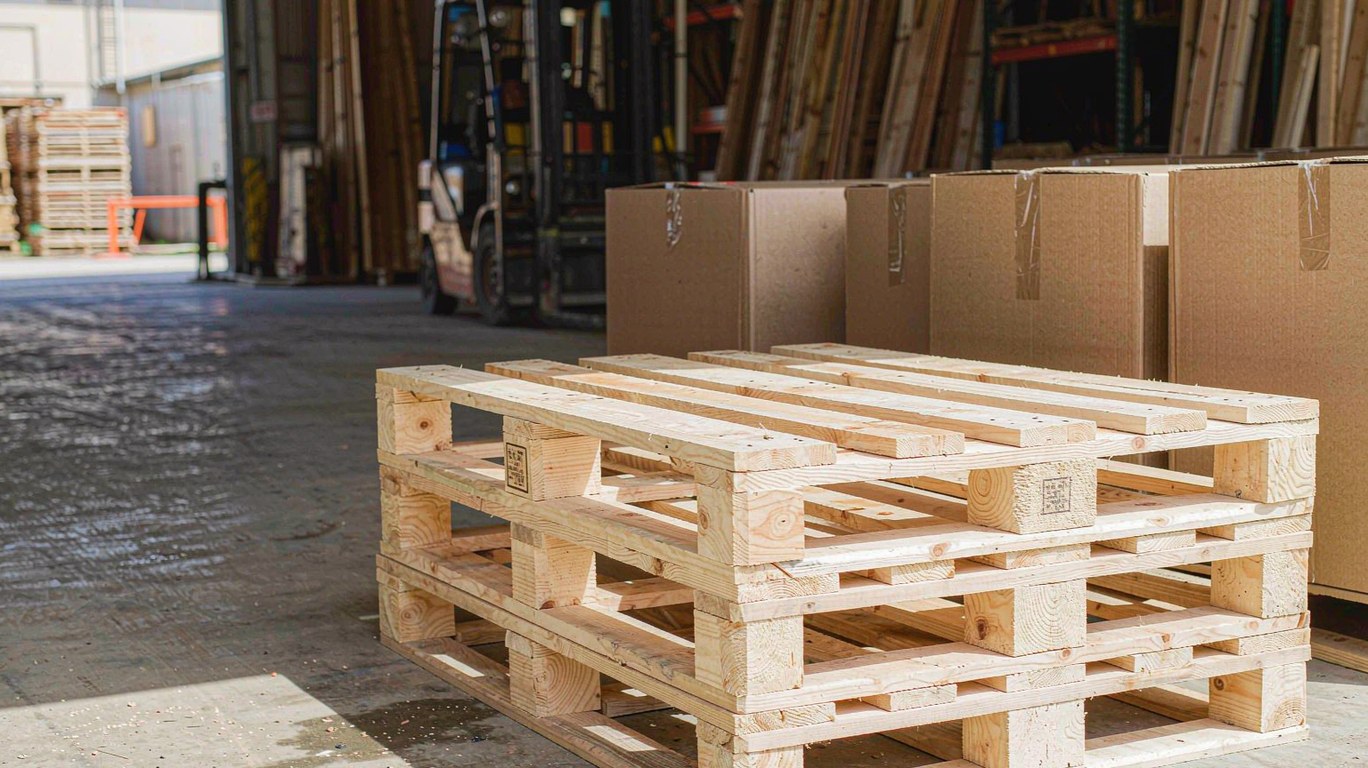
Wood is bought by volume, caps are sold by piece. The conversion between the two is where a quote is won or lost, and it is rarely shown to the buyer.
Take that 52 mm cap. The turned blank must be at least 56 × 56 × 42 mm to leave room for clamping, rounding and face trimming. That is roughly 132 cm³ of board per cap. A finished cap of the same external dimensions occupies about 62 cm³. On paper the yield is 47%, before any defect is considered.
Real numbers are worse. Planing two faces removes 3–4 mm. Cutting around knots, sap pockets and end checks removes another 10–15% on a character-grade board. A well-run walnut line lands at 52–62% usable yield; an inexperienced one at 40% and quietly charges you for the difference.
Three questions expose this fast:
- What blank size are you quoting, and what board thickness are you buying?
- What is your assumed yield percentage for this species and grade?
- Is grain direction vertical on all pieces, or are you allowing cross-grain on the hidden faces?
Grain direction affects both appearance and movement. A cap turned with the grain running vertically shows a continuous figure around the cylinder — the premium look. Cross-grain blanks machine faster from narrower boards but can telegraph a seam after finishing, especially in rosewood.
2. Machining time: the honest unit of production cost
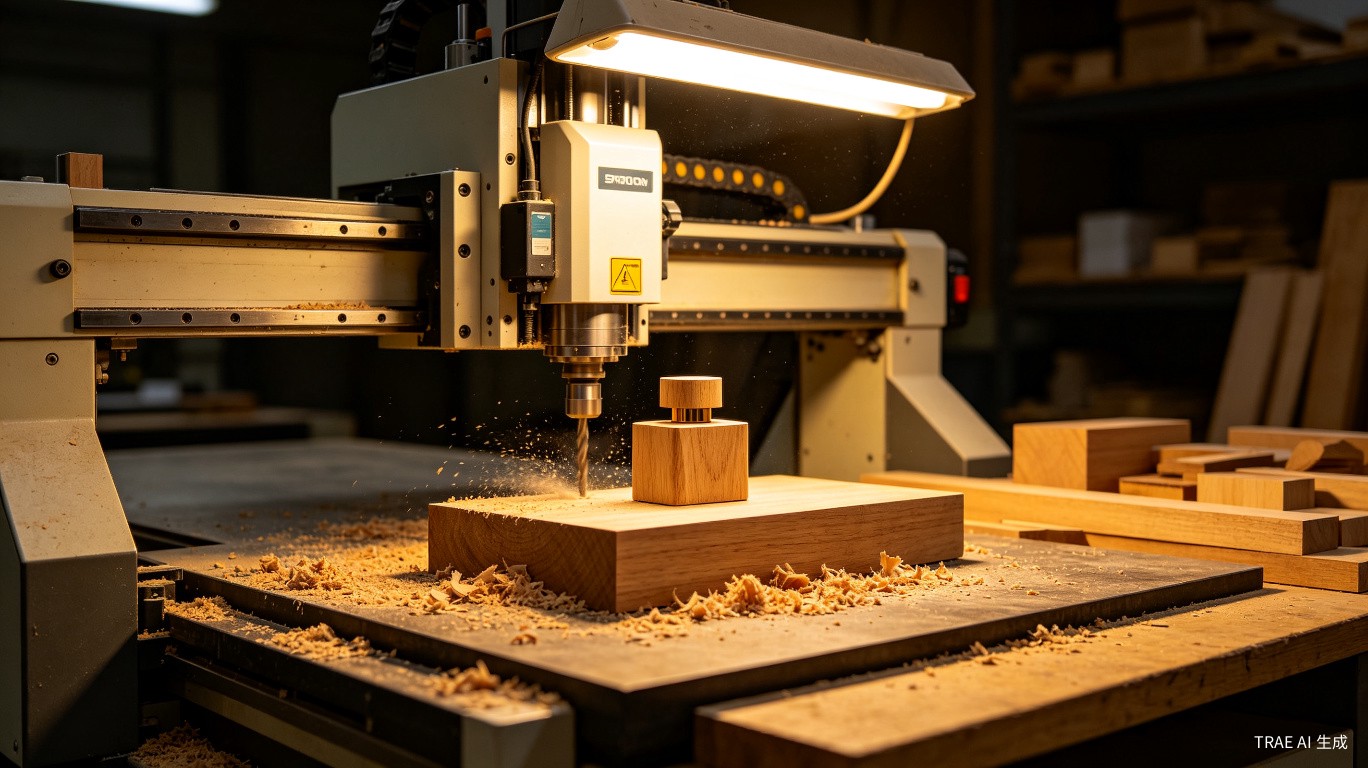
For a simple round cap, a CNC turning centre runs 45–90 seconds per piece including load and unload. Add a liner pocket and a magnet recess and you add a second operation. Add fluting, facets or a knurled grip and you either move to a 5-axis path or accept a longer cycle and a higher scrap rate.
At a typical machine rate of USD 18–30 per hour, every extra 30 seconds of cycle time adds roughly USD 0.15–0.25 per piece. That single line explains most of the gap between a USD 1.80 quote and a USD 2.60 quote for visually similar caps.
This is also why “just add a small chamfer” is never free. It changes the tool path, the tooling wear and often the fixture.
3. Finishing: where quality is either built in or buffed out
Finishing is the least comparable line item in any quotation, because “matte finish” covers everything from a single wiped oil coat to a three-coat catalysed system with 400-grit sanding between coats and a colour-match approval against your reference cap.
- Hard wax oil: one or two coats, 1 day, natural tactile feel, repairable. Lowest cost, least chemical load — also the best story for EU buyers under PPWR.
- Catalysed PU, matte: two to three coats plus sanding, 2–3 days, more uniform colour, better resistance to handling and alcohol.
- High gloss: the least forgiving. Any sanding scratch or dust nib shows. Expect a higher rework allowance, and expect to pay for it.
Colour matching is a separate cost when you need caps to match an existing bottle collar or a Pantone reference across batches. Ask whether the price includes a colour-match approval round or only one submission.
4. Hardware and inserts: small parts, disproportionate impact
On a cap that sells for USD 2.00, the magnet pair might be USD 0.03 and the liner USD 0.02 — but they decide whether the cap stays on the bottle in a retail box and whether the perfume evaporates in storage.
- Magnet grade: N35 is adequate for most 50 ml bottles; N42–N52 gives a heavier, more deliberate pull. Going up one grade typically adds a few cents and is often the cheapest perceived-quality upgrade available.
- Liner: EVA foam, PE foam, cork, or a moulded PP plug. A 1 mm EVA disc is the default; cork is the premium and PPWR-friendly option. A cap with no liner relies on the glass neck rim alone and will weep on a warm shelf.
- Inlays: brass, copper or a contrasting wood disc set into the top face. Beautiful, and the single most expensive decorative option per unit because it adds a second part, a second operation and a bonding step.
5. QC and process loss: the 4% nobody wants to discuss
Wood packaging scrap rates run 3–8% in normal production. Hidden cracks appear after finishing, moisture movement reveals a seam, a stain batch drifts. A supplier quoting a 2% loss is either very good or planning to ship the difference.
Ask what AQL level the price assumes for outgoing inspection (AQL 1.5 major / 2.5 minor is standard for wood components) and whether third-party pre-shipment inspection is included or billed separately.
6. Packing, overhead and commercial terms
Export cartons, inner foam or moulded pulp trays, ISPM 15 heat-treated pallets and desiccant all sit here. So does the Incoterm. An FOB Shenzhen quote and a DDP Hamburg quote for the same goods can differ by 25–35% once freight, duty and EU VAT handling are added — and under PPWR the DDP seller also inherits compliance obligations.
Payment terms matter more than buyers expect. A 30/70 split costs the supplier working capital; a factory quoting 100% before shipment is often pricing in its own cash constraint.
The volume curve: why 500 pieces costs 2.5x of 5,000
| Quantity | Relative unit cost (index) | What dominates |
|---|---|---|
| 500 pcs | 240 | Setup, programming, sample approval, material minimum order |
| 2,000 pcs | 145 | Setup amortised, timber bought at project quantity |
| 5,000 pcs | 100 | Baseline: material + cycle time dominate |
| 20,000 pcs | 82 | Timber bought by the cubic metre, fixtures optimised, finishing batched |
If your launch volume is 800 pieces, expect to pay a pilot premium and plan a repeat order. Most factories will hold tooling and pricing for 12 months if you say so up front.
Seven specification choices that quietly add cost
- Tolerance tighter than the material allows. ±0.1 mm on a turned wooden component invites 100% sorting. ±0.3 mm is realistic and fits glass necks comfortably.
- Threaded wood instead of a liner. Thread milling is slow and thread tolerance in wood drifts with moisture. A PP insert costs less and seals better — see our candle lid sealing comparison for the same trade-off on jars.
- Deep laser engraving. Depth means dwell time; a 0.8 mm burn can double engraving cost versus a 0.3 mm mark.
- Multi-colour silkscreen on a curved face. Each colour is a separate pass and a registration risk.
- Brass or copper inlay. Two parts, tighter glue-up, higher scrap.
- FSC chain-of-custody paperwork per shipment. The timber premium is modest; the administrative discipline is not free.
- Many SKUs in small batches. Five colours at 1,000 each costs more than 5,000 of one colour, even at identical total volume.
Where not to cut
Three places where a saving today becomes a claim tomorrow: moisture content (target 8–12% for European and North American markets; kiln-dried to 8% avoids shrinkage cracks in heated interiors), liner quality (a failed seal means leaked fragrance on a retail shelf), and finishing durability (alcohol rub and tape tests exist because these failures are common).
What to send for a quote you can actually compare
- A dimensioned drawing with tolerance callouts, or a physical reference sample
- Species and grade, or “match this sample”
- Finish type and gloss level, plus a colour reference if matching
- Bottle neck finish and required insertion/removal force
- Target quantity and expected annual volume
- Retail packaging constraints (box cavity, weight limit)
- Destination country and required Incoterm
Send those seven items and any competent factory can quote within 48 hours — and you can compare the quotes line by line. Browse the wooden perfume cap range for reference specifications, or read our MOQ and lead time guide before you set your first order quantity.

Written by
TUOCHEN Editorial
Technical content reviewed by our production engineering team in Guangdong. We have been machining custom wood closures and boxes for fragrance brands since 2012, and we write from drawings and production data rather than from market reports. See the factory.
Need this made to your specification?
We produce custom wooden caps, diffuser stoppers, candle lids and gift boxes from 500 pcs, with FSC certified timber and samples in 7–10 days.