Wooden packaging sits in an awkward regulatory position: it is a manufactured consumer product and, when used to protect itself in transit, also a wood packaging material. That dual identity is why buyers receive contradictory advice about fumigation, and why shipments of finished wooden caps occasionally arrive at a port where an officer asks for a certificate nobody thought was needed.
This guide untangles the two questions — how is your product classified, and how is the material it travels in treated — and lists the documents that are genuinely checked.
Two different questions that get mixed together
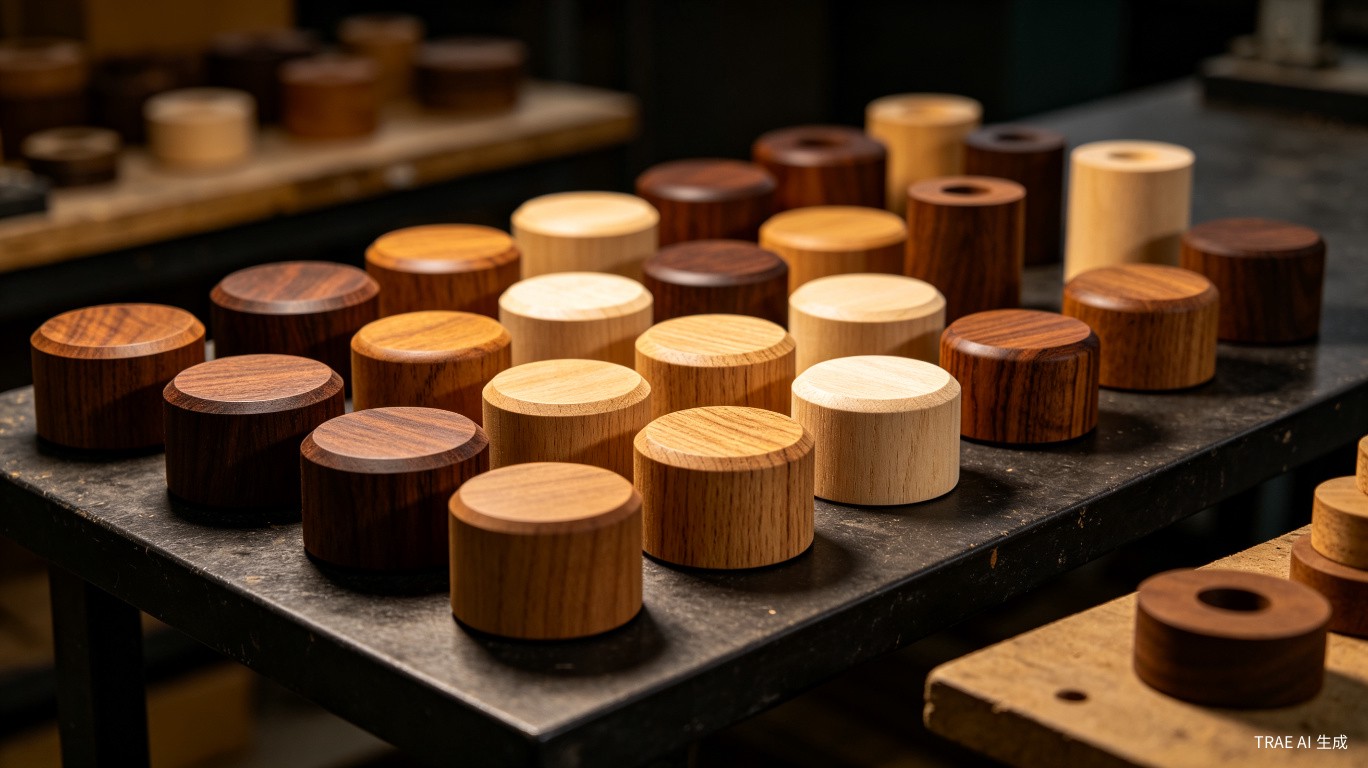
Question one: your product. A wooden perfume cap, a wooden candle lid, a hinged wooden gift box. These are finished manufactured articles. They are classified by HS code and subject to duty, but they are not wood packaging material in the phytosanitary sense.
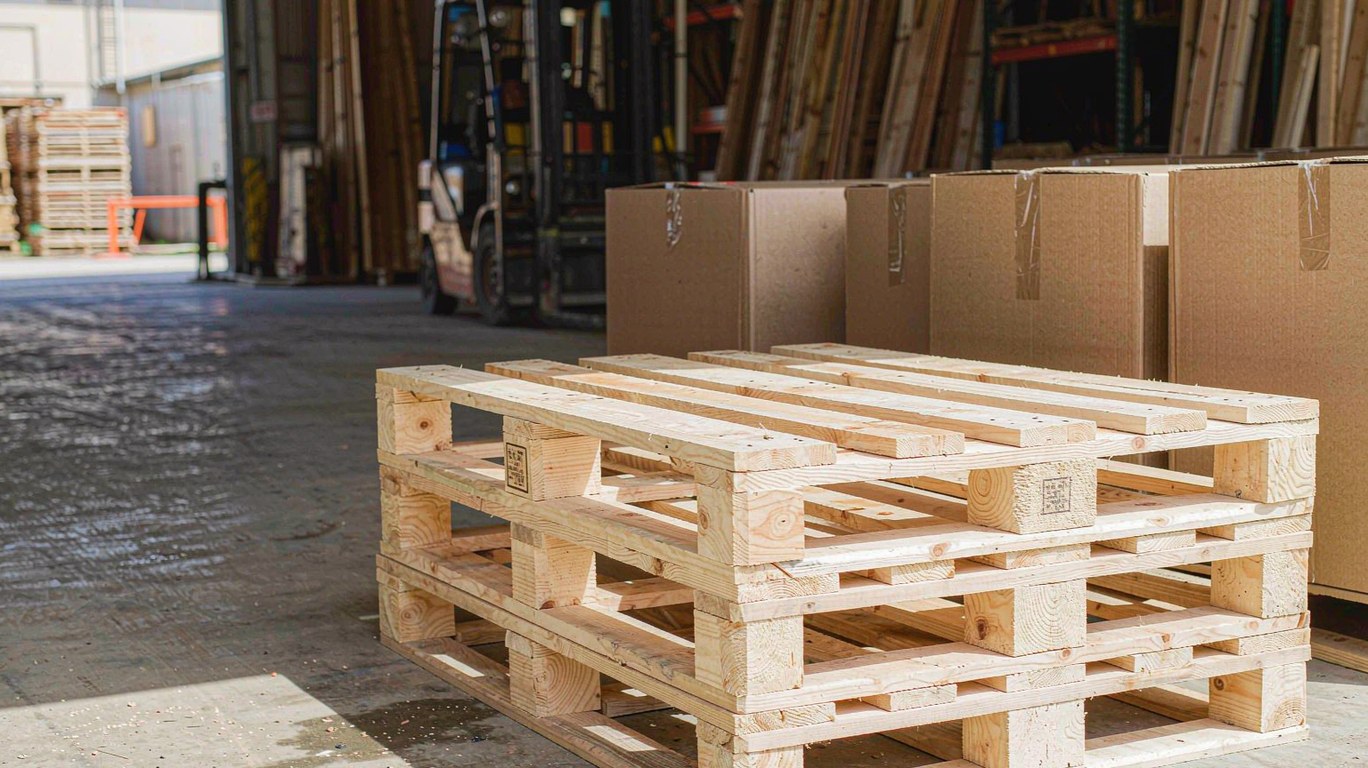
Question two: the material it ships in. The pallet, the crate, the dunnage blocks, the spacer bars. These are Solid Wood Packaging Material (SWPM) and fall under ISPM 15, the international phytosanitary standard.
Almost every confusion dissolves once you keep these separate. Your caps do not need fumigation. The pallet under the carton might.
How ISPM 15 actually works
- Scope: solid wood packaging — pallets, crates, boxes, drums, dunnage, spacers — made from raw wood thicker than 6 mm.
- Treatments: heat treatment (HT) at 56 °C core temperature for 30 continuous minutes, dielectric heating, or methyl bromide (MB), which is being phased out under the Montreal Protocol and refused by the EU and Australia among others.
- The mark: the IPPC wheat-symbol logo, ISO country code (CN for China), a producer registration number, and the treatment code (HT, DH, MB). It is stamped on at least two opposite sides.
- Exempt: processed wood — plywood, MDF, particleboard, OSB, veneer — because the manufacturing process removes the pest risk. Also exempt: paper and cardboard, and manufactured wood articles that are the product itself.
The trap most first-time importers hit
Three real scenarios, three different answers:
| How it ships | ISPM 15 needed? | Why |
|---|---|---|
| Caps in cartons, cartons on a hardwood pallet | Yes — on the pallet | The pallet is SWPM. Caps are irrelevant to the standard. |
| Caps loose in a solid-wood crate | Yes — on the crate | The crate is SWPM. Cheaper to switch to a plywood crate and skip the issue. |
| A wooden gift box that contains the bottle, sold to the consumer | No | It is primary packaging, i.e. the product the consumer receives, not transit material. |
That third row causes occasional friction because an officer may still ask. Keep a one-paragraph statement in your document pack explaining that the wooden box is retail packaging, classified under its own HS heading, and not transit SWPM. It resolves the question in seconds instead of a hold.
Note also the 6 mm rule: thin wood veneer, shavings and wood wool are outside the standard’s scope, which is why a crate lined with wood wool does not need a mark while the crate itself does.
HS classification: get this right before the first invoice
| Product | Heading | Notes |
|---|---|---|
| Wooden perfume or candle cap, turned or machined, no other function | 4421.99 | “Other articles of wood — other”. HS 2022 split 4421.91 for bamboo and 4421.99 for everything else. |
| Wooden gift box, hinged, lined | 4420.90 | Wood marquetry, caskets and cases. Distinct from packing cases. |
| Wooden crate or packing case used for transport | 4415.10 | Packing cases, boxes, crates, drums. Duty treatment differs from 4420. |
| Wooden display tray or point-of-sale stand | 4420.90 or 4421.99 | Depends on construction and whether it is furniture-like; confirm with your broker. |
Two classification errors recur. First, a cap declared under 4420 because it is “part of the bottle’s presentation” — 4420 covers cases and boxes, not closures. Second, a gift box declared under 4415 because it “packs the bottle” — that switches duty rates and, in some markets, triggers the ISPM 15 question unnecessarily. Ask your supplier to state the six-digit code on the commercial invoice, and check it matches the entry your broker files.
Documents that are actually checked
| Document | Purpose | Issued by |
|---|---|---|
| Commercial invoice | Value, HS code, Incoterm, origin, payment terms | Supplier |
| Packing list | Carton count, dimensions, gross and net weight, pallet count | Supplier |
| Bill of lading / air waybill | Title and carriage contract | Carrier |
| Certificate of origin | Duty preference. Form E for ASEAN, RCEP certificate where applicable | CCPIT / customs-authorized body |
| FSC transaction certificate | Proves the specific shipment’s timber is certified, not just the factory | FSC-accredited certification body |
| Heavy metal test report | PPWR and retailer compliance for EU / US buyers | ISO 17025 lab |
| ISPM 15 mark | On the pallet itself, not a paper document | Registered treatment provider |
Note on tariffs — verify, do not assume
Duty rates on Chinese wood articles into the US and EU have changed repeatedly through 2025 and 2026, including Section 301 lists and additional measures. Any rate printed in an article is stale within months. Ask your broker for the current landed-cost calculation on your specific HS code before you price your product, and ask your supplier to confirm the country of origin of the timber as well as the place of manufacture — origin rules can differ from where the part was machined.
Five reasons a shipment sits at the port
- HS code mismatch between invoice and customs entry — the most common and the slowest to unwind.
- Missing or unregistered IPPC mark on a pallet, or a mark from a producer whose registration has lapsed.
- Certificate of origin that does not cover the shipment date or quantity.
- Under-declared value on a sample or “gift” shipment, which invites inspection of everything else.
- DDP terms without an importer of record — the seller cannot legally clear goods it has no registration to clear.
DDP into the EU now carries compliance weight
Under PPWR, the economic operator placing packaging on the market carries the declaration and EPR obligations. If you buy DDP, that operator is your supplier — which means a factory offering DDP is implicitly offering to hold EU compliance documentation. Most cannot, and the arrangement quietly shifts the obligation back to you after the invoice is paid. FOB or CIF with you as importer of record is cleaner unless your supplier demonstrably has an EU entity.
Pre-booking checklist
- HS code confirmed in writing and matched to your broker’s entry
- Invoice shows Incoterm, origin and the code, not just a description
- Pallet supplier registered and mark legible on two sides
- FSC transaction certificate requested if certified timber was specified
- Test reports current if the destination is EU or a major US retailer
- Carton dimensions and gross weight verified against the packing list
- One-page statement on hand for any wooden component that is retail packaging rather than transit material
None of this is difficult, and all of it is cheaper to fix before the container is booked. For the commercial side of the same conversation — quantities, lead times and payment terms — see our MOQ and shipping guide. For the packing itself, our wooden gift box range ships in plywood crates specifically to keep SWPM out of the equation.

Written by
TUOCHEN Editorial
Technical content reviewed by our production engineering team in Guangdong. We have been machining custom wood closures and boxes for fragrance brands since 2012, and we write from drawings and production data rather than from market reports. See the factory.
Need this made to your specification?
We produce custom wooden caps, diffuser stoppers, candle lids and gift boxes from 500 pcs, with FSC certified timber and samples in 7–10 days.