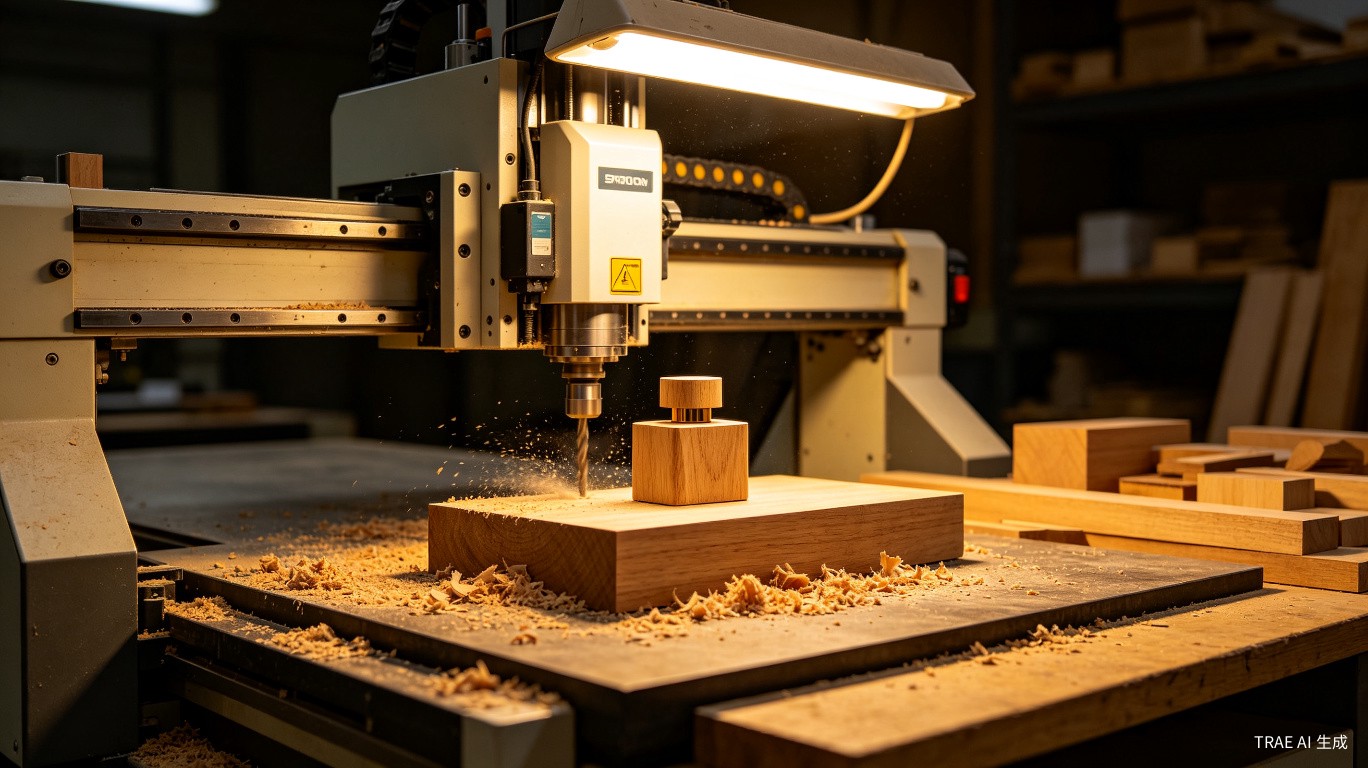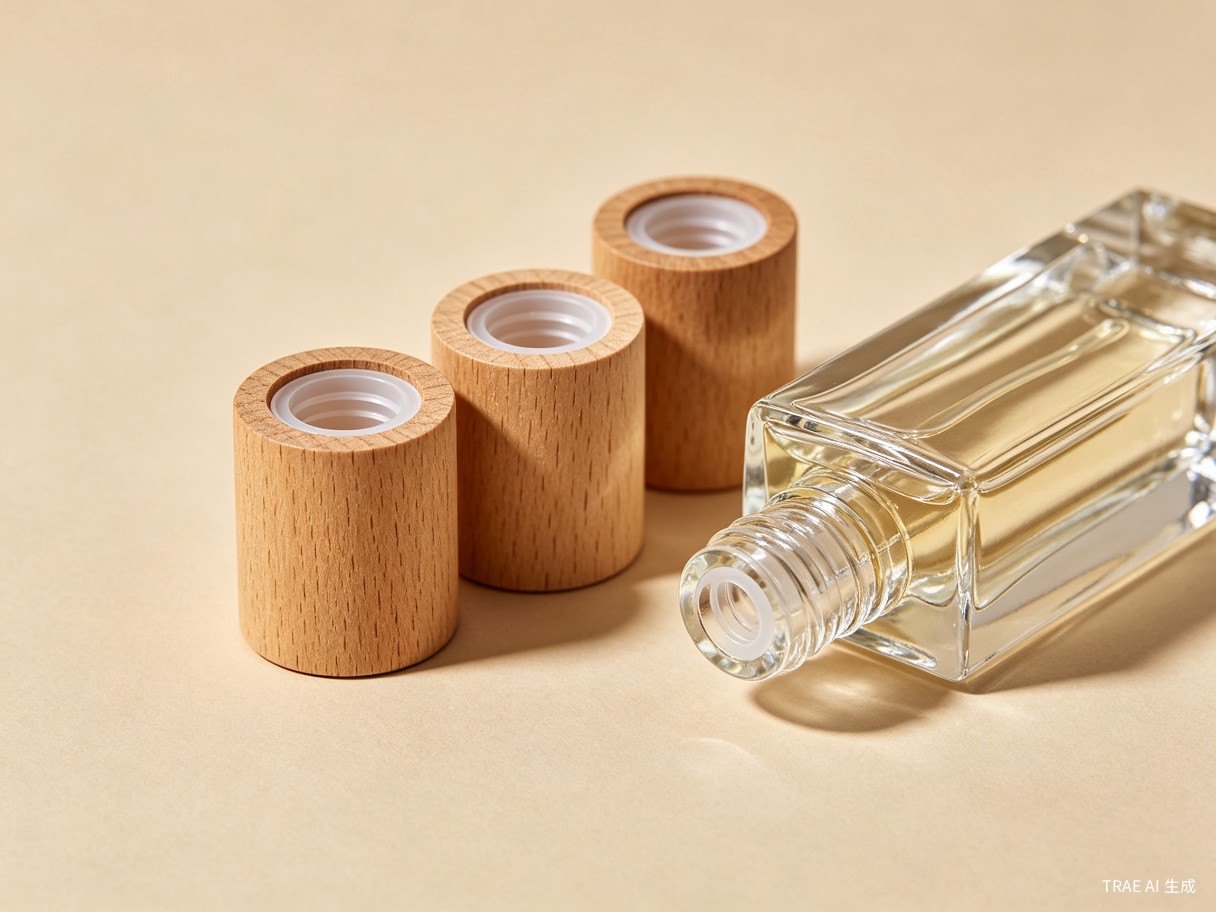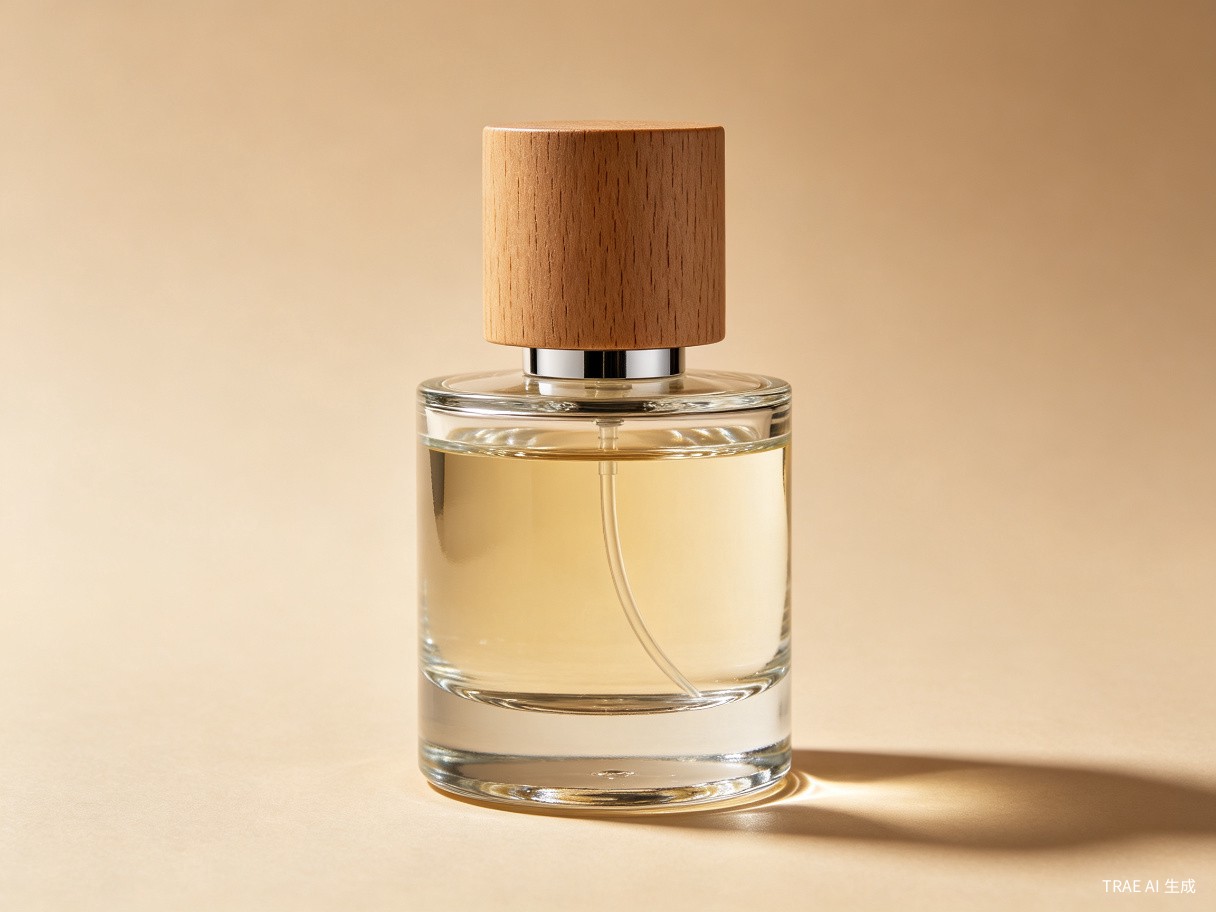
Most fit problems with wooden caps are not machining errors — they are specification errors made before the first chip was cut. The single most common mistake is treating a wooden cap as one part, when it is in fact a three-part system: a wood shell, an insert that carries the thread, and the glass bottle's own neck finish. Get the relationship between the three wrong, and no amount of sample polishing will save the run.
This guide explains the sizing language your glassmaker and your cap supplier must share, the tolerances that decide whether a cap feels premium or loose, and the checks to run before you approve a golden sample.
Reading a neck finish code
Most fragrance and home-fragrance glass follows the GPI (Glass Packaging Institute) finish convention, written as diameter/height — for example 18/415:
- 18 — the nominal thread diameter of the bottle's finish in millimetres.
- 415 — the finish height series: roughly 15 mm tall with a single thread turn. A 410 finish is about 10 mm tall with two shorter thread turns, and 400 is a low-profile continuous thread.
The finishes you will most often meet in fragrance work are 13/415, 15/415, 18/415, 18/410, 20/410 and 24/410, with 28/410 appearing on larger diffuser and candle accessory applications. The code defines the thread profile geometry, so a cap built for an 18/415 bottle from one glassmaker will generally mate with an 18/415 bottle from another — provided both actually follow the standard. That last proviso is worth checking: regional glassmakers occasionally run their own variant, which is why the bottle drawing, not the code, should always govern.
Why wood never threads directly onto glass
A tempting question from buyers new to wood: why not machine the thread straight into the timber? Three reasons, all of them physical:
- Wood moves. Timber is hygroscopic — across the grain it can change dimension by a meaningful fraction of a percent with each large swing in relative humidity. A thread machined in a workshop at 45% RH will not hold the same clearance after six weeks in a container at 80–90% RH.
- Wood is brittle in thin sections. Thread crests in a cap shell are thin walls; one over-torque on a glass thread with sand in it and the crest cracks.
- Threads need precision, wood has grain. Machining a crisp thread through changing grain direction produces tear-out at the crests and an inconsistent feel.
So a wooden cap is engineered as a shell-and-insert: the timber shell carries the look and weight, while a moulded PP or ABS insert — or, on premium caps, a machined aluminium insert — is bonded or friction-fitted inside and carries the thread that meets the glass. This is the same construction principle behind the stoppers in our reed diffuser sizing guide, where the seal is elastomer rather than wood.
The tolerances that decide the feel
"Premium feel" in a closure is mostly removal torque — the resistance you feel unscrewing the cap. Too loose reads as cheap; too tight risks cracking glass threads or shredding the insert. Typical targets in fragrance closures fall in the range of roughly 8–14 in-lb (0.9–1.6 N·m) removal torque, but the right number for your bottle depends on the thread series and your filling line, so set it on the drawing and confirm it on the torque tester, not by feel alone.
Practically, three clearances decide whether you hit that window, and each of them belongs on the cap drawing:
| Check | What to specify | Why it fails in production |
|---|---|---|
| Insert-to-glass thread fit | Insert moulded to the bottle maker's finish drawing; state the glass supplier and drawing revision on the cap order | Inserts bought from a catalogue against a nominal code, while the actual bottle runs an off-standard variant |
| Shell-to-insert interference | Bonded inserts: specify adhesive and cure schedule; friction-fit: specify interference so it survives humidity cycling, not just day one | Friction fits sized dry in the workshop let go after conditioning; or bonded caps pop when adhesive is starved by shell distortion |
| Shell-to-insert concentricity | Cap outer surface concentric with the thread axis within a few tenths of a millimetre | Shell machined in one chucking, insert bored in another — visible wobble on the shelf, even when it screws on fine |
Condition before you judge the fit
A cap that fits beautifully out of the box can fail on the shelf, and vice versa. Before approving a sample, condition assembled caps and empty bottles together for at least 24 hours at 40 °C, then re-check removal torque and appearance. This single cheap test flushes out the majority of insert-let-go and stress-crack failures long before your customer's warehouse does — it is part of the same test battery we run on diffuser stoppers. For sea freight to humid climates, add a cycle at elevated humidity and check whether timber shells show finish cracking around the insert bore; a shell that develops hairlines in the test needs more wall thickness or a different species, not a stronger glue.
Pre-sample fit checklist
- Bottle drawing on file — actual finish drawing with revision number, not just the GPI code
- Insert material specified — PP, ABS or aluminium, and how it is fixed to the shell
- Removal torque target — a number on the drawing, plus the tester it will be judged on
- Conditioning protocol — 24 h / 40 °C minimum before visual and torque approval
- Marking sequence — if the cap carries engraving or foil, confirm the marking happens after final sizing; see our logo method comparison for why sequence changes the result
- Cost honesty — a two-part cap with a metal insert prices differently from a simple shell; the cost structure breakdown shows where that difference comes from
If you are matching caps to a bottle you already have in hand, send us the bottle or its drawing — we will confirm the finish, propose the insert construction, and quote shell and insert as separate line items so you can see exactly what you are paying for.

Written by
TUOCHEN Editorial
Technical content reviewed by our production engineering team in Guangdong. We have been machining custom wood closures and boxes for fragrance brands since 2012, and we write from drawings and production data rather than from market reports. See the factory.
Need this made to your specification?
We produce custom wooden caps, diffuser stoppers, candle lids and gift boxes from 500 pcs, with FSC certified timber and samples in 7–10 days.